Nutrition for CrossFit Athletes Fueling Peak Performance
Nutrition for CrossFit athletes is paramount for achieving optimal results. This comprehensive guide explores the intricate relationship between diet and CrossFit performance, covering macronutrient needs, hydration strategies, fueling for workouts, and much more. We delve into various dietary approaches, including vegan, vegetarian, keto, and low-carb options, offering practical advice and actionable strategies to help CrossFit athletes optimize their nutrition for enhanced performance and recovery.
From designing personalized meal plans based on training intensity to understanding the importance of gut health and managing energy levels, we aim to provide a holistic approach to nutritional excellence. This guide also addresses common concerns such as budget-friendly eating and weight management, ensuring that every athlete, regardless of their circumstances, can achieve their nutritional goals.
Macronutrient Needs for CrossFit Athletes
CrossFit, with its varied and intense workouts, demands a carefully balanced macronutrient intake to support optimal performance, recovery, and overall health. Understanding the specific needs of a CrossFit athlete, compared to a sedentary individual, is crucial for achieving fitness goals and preventing injury. This section will delve into the macronutrient requirements, providing a sample meal plan and outlining excellent food sources.
Macronutrient Ratio for CrossFit Athletes
The ideal macronutrient ratio for a CrossFit athlete varies based on individual factors like training intensity, goals (strength, endurance, weight loss), and body composition. However, a general guideline suggests a higher carbohydrate intake to fuel high-intensity workouts, a moderate protein intake for muscle repair and growth, and a moderate fat intake for hormone production and overall health. A sample ratio could be 40-50% carbohydrates, 30-40% protein, and 20-30% fats.
This ratio can be adjusted based on individual needs and preferences. For example, an athlete focusing on strength gains might slightly increase their protein intake, while an athlete aiming for weight loss might slightly reduce their carbohydrate intake.
Sample Meal Plan (2000 Calories)
This sample meal plan provides approximately 2000 calories, with a macronutrient ratio of 45% carbohydrates, 35% protein, and 20% fat. Remember that this is a sample, and individual calorie and macronutrient needs will vary significantly. Consult a registered dietitian or sports nutritionist for personalized guidance.
| Meal | Description | Carbohydrates (g) | Protein (g) | Fat (g) |
|---|---|---|---|---|
| Breakfast (400 calories) | Oatmeal (1/2 cup) with berries (1/2 cup), nuts (1/4 cup), and protein powder (1 scoop) | 50 | 30 | 10 |
| Lunch (600 calories) | Chicken breast (6 oz) with brown rice (1 cup) and mixed vegetables (1 cup) | 75 | 50 | 15 |
| Dinner (700 calories) | Salmon (4 oz) with sweet potato (1 medium) and broccoli (1 cup) | 60 | 40 | 30 |
| Snacks (300 calories) | Greek yogurt (1 cup) with fruit (1/2 cup), a handful of almonds (1/4 cup) and a protein bar | 25 | 25 | 10 |
Macronutrient Needs: CrossFit vs. Sedentary Individuals
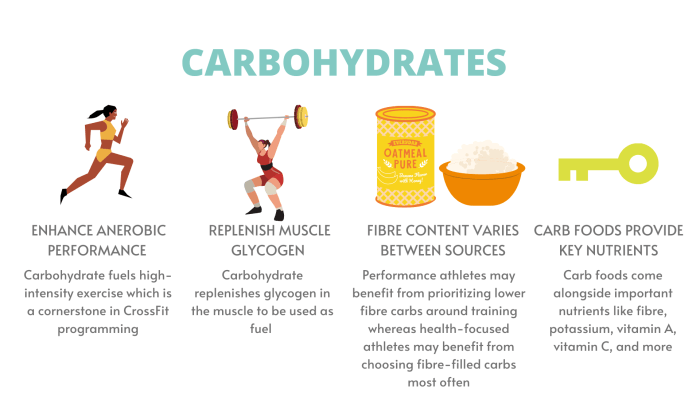
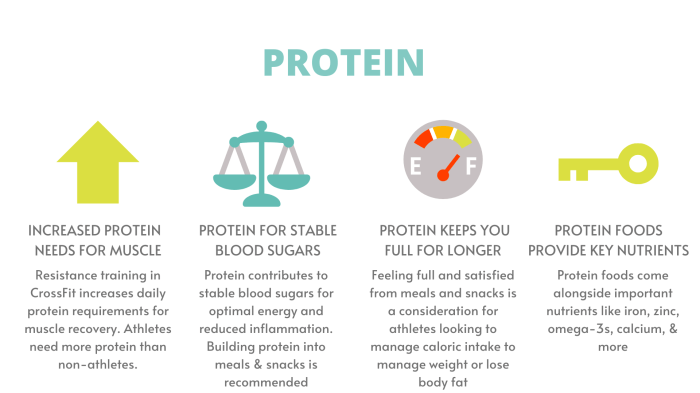
The macronutrient needs of a CrossFit athlete differ significantly from those of a sedentary individual due to the increased energy expenditure and physiological demands of high-intensity training. CrossFit athletes require a substantially higher caloric intake to fuel their workouts and support muscle recovery and growth. They need more carbohydrates for immediate energy, more protein for muscle repair and growth, and sufficient fats for hormone production and overall health.
A sedentary individual, on the other hand, requires fewer calories and a lower proportion of carbohydrates and protein. The increased protein requirement for CrossFit athletes is critical because it facilitates muscle protein synthesis, crucial for repairing muscle tissue damaged during intense workouts and promoting muscle growth. The higher carbohydrate requirement provides the necessary fuel for high-intensity workouts, preventing glycogen depletion and fatigue.
Best Food Sources for Macronutrients (Post-Workout)
Prioritizing easily digestible foods post-workout is crucial for optimal recovery.
| Macronutrient | Food Source | Benefits | Notes |
|---|---|---|---|
| Carbohydrates | Bananas, sweet potatoes, rice cakes | Rapid glucose replenishment | High glycemic index for quick energy |
| Protein | Whey protein, Greek yogurt, eggs | Muscle protein synthesis | High in essential amino acids |
| Fats | Avocado, nuts, olive oil | Hormone production, satiety | Healthy fats for overall health |
| Combination | Protein smoothie with fruit and nut butter | Balanced macronutrients | Convenient and customizable |
Hydration Strategies for CrossFit Training
Maintaining optimal hydration is crucial for CrossFit athletes, impacting performance, recovery, and overall health. Dehydration, even mild, can significantly impair strength, endurance, and cognitive function, leading to reduced workout intensity and increased risk of injury. Conversely, proper hydration supports efficient thermoregulation, nutrient transport, and waste removal, accelerating recovery and minimizing muscle soreness.
Electrolyte Balance and Timing
Electrolytes, including sodium, potassium, magnesium, and calcium, play a vital role in muscle contraction, nerve impulse transmission, and fluid balance. Loss of electrolytes through sweat during intense CrossFit workouts can lead to muscle cramps, fatigue, and decreased performance. Optimal electrolyte replenishment should begin
- before* training, continue
- during* prolonged or high-intensity sessions, and extend
- after* the workout to facilitate rehydration and recovery. Pre-workout electrolyte supplementation can help maintain hydration levels, while intra-workout strategies, such as electrolyte drinks or electrolyte tablets dissolved in water, can prevent significant electrolyte depletion. Post-workout replenishment focuses on replacing lost fluids and electrolytes to support muscle recovery and prevent dehydration. The specific electrolyte needs vary based on individual sweat rates, training intensity, and duration.
Calculating Daily Fluid Intake
A general guideline for daily fluid intake is to consume approximately 0.5 to 1 ounce of water per pound of body weight. However, this recommendation needs adjustments based on training volume and environmental factors. For example, an athlete weighing 150 pounds might need 75 to 150 ounces of water daily without training. With intense CrossFit workouts lasting an hour or more, particularly in hot and humid conditions, this requirement can increase significantly.
For every hour of intense training, add an extra 16-24 ounces of fluid. In extremely hot and humid environments, consider adding even more. Individual sweat rates vary; therefore, monitoring urine color is a useful indicator of hydration status. Pale yellow urine suggests adequate hydration, while dark yellow indicates dehydration.
Practical Hydration Tips for CrossFit Workouts
Maintaining hydration throughout a CrossFit workout requires a proactive approach.
- Before* training, ensure adequate hydration by consuming sufficient fluids several hours prior to the workout. This allows time for absorption and prevents the need to drink large volumes immediately before starting.
- During* intense workouts, sip fluids regularly to prevent significant dehydration. Small, frequent sips are more effective than large gulps, as they allow for better absorption. Electrolyte-containing beverages can be beneficial during prolonged workouts.
- After* training, replenish fluids lost through sweat, aiming to consume at least 1.5 times the amount of fluid lost during the workout. This helps restore hydration levels and promote muscle recovery. Monitor your urine color and adjust fluid intake as needed. The use of a hydration tracking app or a simple log can be helpful in maintaining consistent hydration.
Fueling for CrossFit Workouts
Proper nutrition is paramount for optimal performance and recovery in CrossFit. The intensity and variety of workouts demand a carefully planned nutritional strategy, encompassing both pre- and post-workout fueling. Ignoring this crucial aspect can significantly hinder athletic progress and increase the risk of injury.
Pre-Workout Nutrition for Energy and Performance, Nutrition for CrossFit athletes
Consuming the right foods before a CrossFit workout provides the necessary energy and fuels your muscles for optimal performance. The timing and type of fuel depend on the intensity and duration of the workout. A meal or snack consumed 1-3 hours before training allows for proper digestion, preventing gastrointestinal distress during the workout.
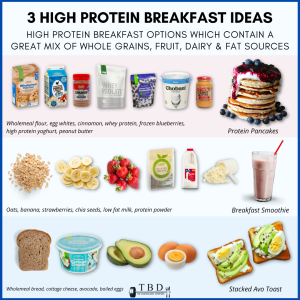
Suitable pre-workout meals might include oatmeal with berries and nuts, a whole-wheat toast with avocado, or a Greek yogurt with fruit. For shorter timeframes before a workout, easily digestible snacks like a banana, a small handful of trail mix, or a rice cake with peanut butter are excellent choices. These provide a balance of carbohydrates for energy and some protein for muscle preservation.
Post-Workout Nutrition for Muscle Recovery and Glycogen Replenishment
Post-workout nutrition is equally critical for facilitating muscle recovery and replenishing depleted glycogen stores. The window of opportunity for optimal nutrient uptake is generally within 30-60 minutes after training. This is when your body is most receptive to replenishing energy stores and initiating the repair process.
Ideal recovery meals should contain a combination of carbohydrates and protein. Examples include a protein shake with fruit, a chicken breast salad sandwich on whole-wheat bread, or a lean protein source (like fish or chicken) with sweet potatoes. These meals provide the building blocks for muscle repair and restore glycogen levels, preparing the body for the next workout.
Foods to Avoid Before and After CrossFit Workouts
Certain foods can negatively impact performance and recovery. Avoiding these is crucial for maximizing results.
Foods high in fat and fiber should generally be avoided before a workout as they can take longer to digest, potentially causing discomfort during exercise. Examples include greasy fried foods, large quantities of raw vegetables, and high-fiber cereals. After workouts, it is also advisable to avoid highly processed foods, sugary drinks, and excessive amounts of saturated and unhealthy fats, as these can hinder the recovery process and contribute to inflammation.
Healthy Recipes and Cooking Tips for CrossFit Athletes
Maintaining a balanced diet is crucial for CrossFit athletes to optimize performance, recovery, and overall health. This section provides three nutritious and easily prepared recipes, along with practical cooking tips to help maximize nutrient intake and minimize time spent in the kitchen. These recipes are designed to provide a good balance of macronutrients to support intense training.
Three High-Nutrient Recipes for CrossFit Athletes
These recipes are designed to be quick, easy, and packed with nutrients essential for fueling CrossFit workouts and promoting recovery. They prioritize lean protein, complex carbohydrates, and healthy fats.
- Recipe 1: Quick Salmon with Roasted Asparagus and Quinoa
Ingredients: 1 salmon fillet (4-6 oz), 1 bunch asparagus, ½ cup quinoa, 1 tbsp olive oil, salt, pepper, lemon juice.
Instructions: Preheat oven to 400°F (200°C). Toss asparagus with olive oil, salt, and pepper. Roast for 15 minutes. Meanwhile, cook quinoa according to package directions. Season salmon with salt, pepper, and lemon juice.
Bake alongside asparagus for the last 10-12 minutes, or until salmon is cooked through.
Nutritional Information (per serving): Approximately 400-500 calories, 30-40g protein, 30-40g carbohydrates, 15-20g fat.
- Recipe 2: Chicken and Veggie Stir-Fry
Ingredients: 1 lb boneless, skinless chicken breast (cubed), 1 cup broccoli florets, 1 cup sliced bell peppers, ½ cup sliced carrots, 2 tbsp soy sauce (low sodium), 1 tbsp sesame oil, 1 clove garlic (minced), brown rice.
Instructions: Cook brown rice according to package directions. Stir-fry chicken in sesame oil until cooked through. Add garlic, broccoli, bell peppers, and carrots. Stir-fry for 5-7 minutes, or until vegetables are tender-crisp. Stir in soy sauce.
Serve over brown rice.
Nutritional Information (per serving): Approximately 450-550 calories, 40-50g protein, 40-50g carbohydrates, 10-15g fat.
- Recipe 3: Lentil Soup with Whole Wheat Bread
Ingredients: 1 cup brown or green lentils, 4 cups vegetable broth, 1 cup chopped carrots, 1 cup chopped celery, 1 onion (chopped), 2 cloves garlic (minced), 1 tsp cumin, salt, pepper, whole wheat bread.
Instructions: Sauté onion, carrots, and celery in a large pot until softened. Add garlic, cumin, salt, and pepper. Stir in lentils and vegetable broth. Bring to a boil, then reduce heat and simmer for 30-40 minutes, or until lentils are tender. Serve with a slice of whole wheat bread.
Nutritional Information (per serving): Approximately 350-450 calories, 20-25g protein, 50-60g carbohydrates, 5-10g fat.
Five Practical Cooking Tips for CrossFit Athletes
Time is often a constraint for busy CrossFit athletes. These tips focus on efficient cooking methods that preserve nutrients.
- Utilize batch cooking: Prepare large quantities of grains, proteins, and vegetables on the weekend to have ready-to-eat meals throughout the week.
- Embrace one-pan or one-pot meals: Minimize cleanup and cooking time by using methods like sheet pan dinners or slow cooker recipes.
- Steam or microwave vegetables: These methods retain more nutrients compared to boiling.
- Don’t overcook proteins: Overcooking can make proteins tough and less digestible.
- Choose quick-cooking grains: Quinoa and brown rice cook relatively quickly compared to other grains.
Weekly Meal Plan Incorporating the Recipes
This sample meal plan incorporates the three recipes, offering variety and sufficient calories for a CrossFit athlete. Calorie needs vary greatly depending on individual factors, so adjust portions accordingly.
| Day | Breakfast | Lunch | Dinner | Snacks |
|---|---|---|---|---|
| Monday | Oatmeal with berries and nuts | Leftover Lentil Soup | Quick Salmon with Roasted Asparagus and Quinoa | Greek yogurt, fruit |
| Tuesday | Scrambled eggs with whole-wheat toast | Chicken and Veggie Stir-Fry | Leftover Quick Salmon with Roasted Asparagus and Quinoa | Trail mix |
| Wednesday | Protein smoothie | Leftover Chicken and Veggie Stir-Fry | Lentil Soup with Whole Wheat Bread | Hard-boiled eggs |
| Thursday | Oatmeal with banana and peanut butter | Leftover Lentil Soup | Quick Salmon with Roasted Asparagus and Quinoa | Greek yogurt, fruit |
| Friday | Scrambled eggs with avocado toast | Chicken and Veggie Stir-Fry | Leftover Quick Salmon with Roasted Asparagus and Quinoa | Trail mix |
| Saturday | Pancakes (whole wheat) with fruit | Leftover Chicken and Veggie Stir-Fry | Lentil Soup with Whole Wheat Bread | Protein bar |
| Sunday | Breakfast burrito (whole wheat tortilla, eggs, veggies) | Leftover Lentil Soup | Quick Salmon with Roasted Asparagus and Quinoa | Cottage cheese |
Ultimately, mastering nutrition is a crucial element of success in CrossFit. By understanding your individual needs, carefully selecting foods that support your training, and implementing effective hydration and recovery strategies, you can unlock your full athletic potential. This guide serves as a foundational resource, empowering you to make informed choices that fuel your journey to peak performance and lasting well-being.
Remember that consistency and mindful eating are key to long-term success.
FAQ Compilation: Nutrition For CrossFit Athletes
What are the best snacks for before a CrossFit WOD?
Bananas, berries, a small amount of oatmeal, or a rice cake with nut butter are good options for easily digestible carbohydrates that provide sustained energy.
How much protein should I consume daily as a CrossFit athlete?
The recommended daily protein intake for CrossFit athletes varies depending on factors such as training volume, body weight, and individual goals. A general guideline is 1.6-2.2 grams of protein per kilogram of body weight.
Are supplements necessary for CrossFit athletes?
Supplements can be beneficial, but they shouldn’t replace a whole-foods based diet. Consult a healthcare professional or registered dietitian before starting any supplement regimen.
How can I prevent muscle soreness after intense workouts?
Prioritize proper nutrition, including sufficient protein and carbohydrates for muscle repair and glycogen replenishment. Adequate hydration and rest are also crucial.